


Informing infrastructure interventions via novel near-miss data collection

By: VELO.AI, INC.
Project Objective & Overview
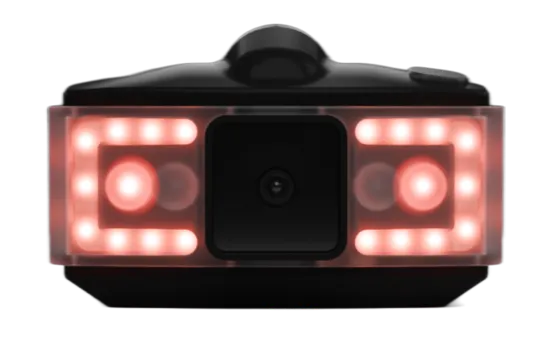
Developed and deployed a scalable, AI-driven sensor system to detect, record, and analyze near-miss interactions between vehicles and Vulnerable Road Users (VRUs). The project addresses the critical gap in traditional safety analysis by moving beyond sparse crash data to actionable, proactive near-miss observations.
Problem Statement: Reliance on historical crash data ignores high-frequency "near-miss" events, delaying safety interventions until accidents occur.
Pilot Site: Pittsburgh, PA (Urban and mixed-traffic environments).
Partners: POGOH (Bikeshare Fleet), Carnegie Mellon University Mobility Data Analytics Center (Research), City of Pittsburgh (Advisory).
Key Results & Findings
Fleet Deployment: Collected 1,000+ miles of data via consumer/bikeshare fleets, capturing confirmed near-misses and collisions.
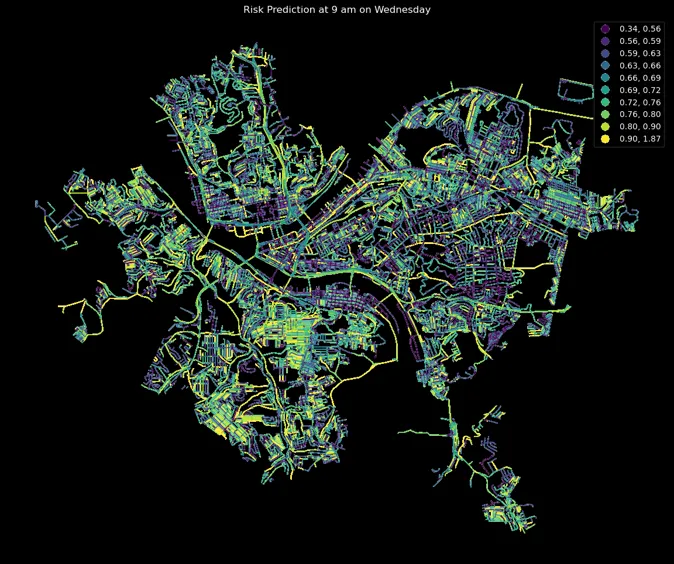
Predictive Modeling: Built region-wide predictive safety model with CMU, extrapolating localized risk to the full city network.

Advanced Analytics: Validated surrogate safety measures (passing distance/speed) and prototyped 3D event reconstruction.
Infrastructure Assessment: Mapped road surface quality (potholes) and traffic congestion using IMU and vision data.
Challenges: Retrofitting bikeshare fleets proved complex; future scaling requires factory integration.

Company Info
VELO.AI, INC. is a Pittsburgh-based robotics company utilizing edge-AI perception and predictive analytics to improve roadway safety for Vulnerable Road Users.
Project POC: Clark Haynes, Founder & CEO
Email: gch@velo.ai
Website: https://www.velo.ai
Next Steps
Commercialization: Actively commercializing technology with fleet and municipal partners to deploy sensor networks for real-time safety auditing.
Advanced Data Products: Developing even more refined datasets, specifically moving toward full 3D modeling of the roadway environment.
City-Scale Trajectories: Analyzing precise actor trajectories (vehicles, pedestrians, cyclists) across entire city networks, including accurate metrics of dangerous road interactions between traffic actors.