


National ITS Reference Architecture
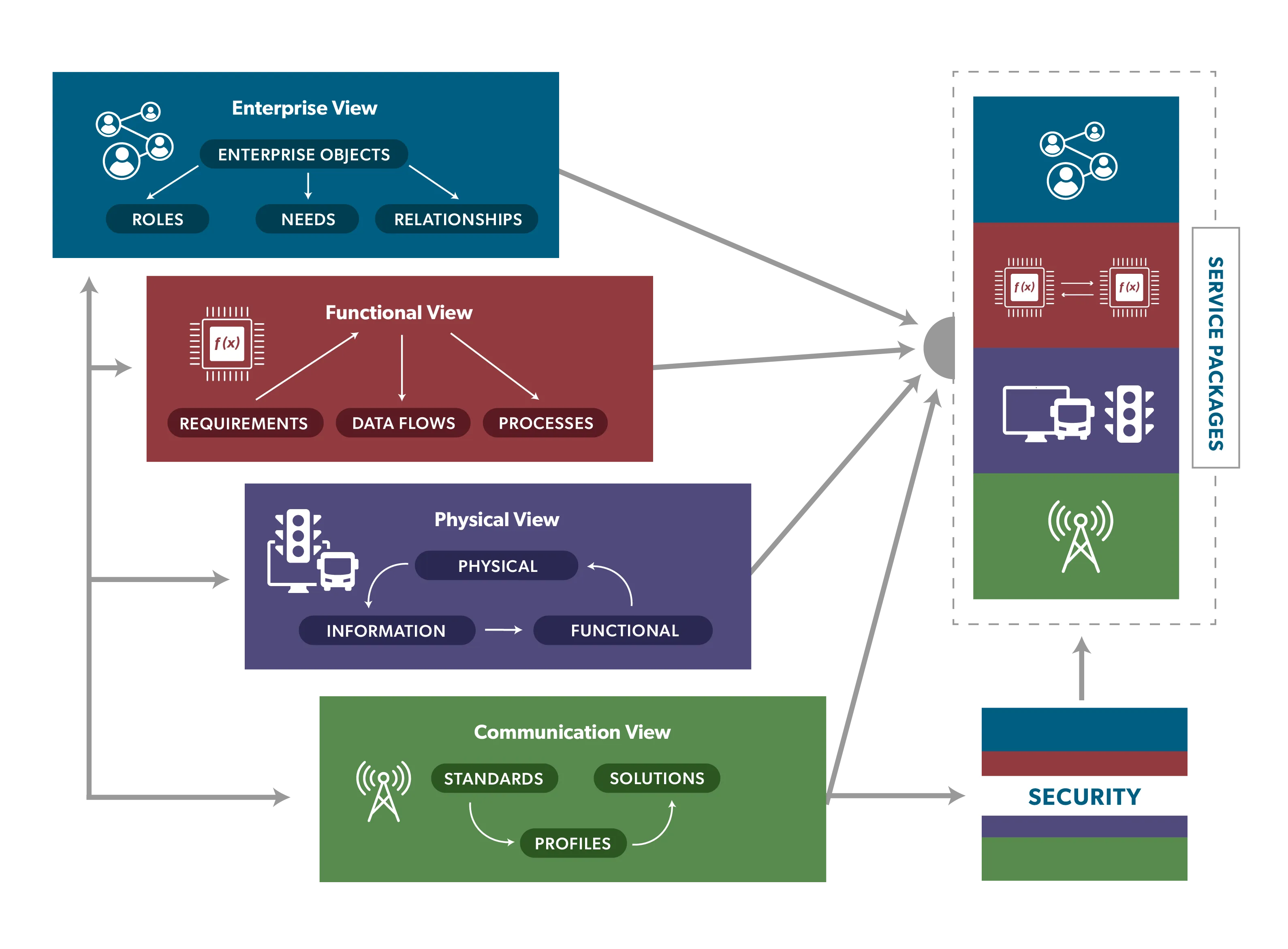
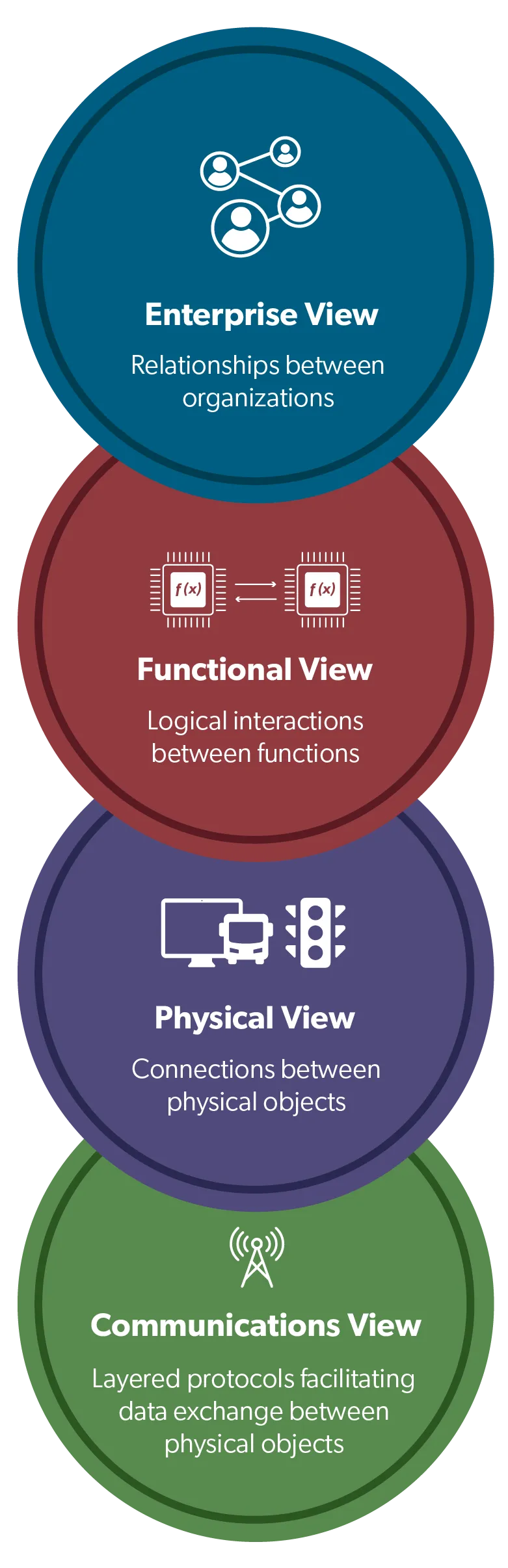
The National ITS Reference Architecture, also known as the “Architecture Reference for Cooperative and Intelligent Transportation” or simply “ARC-IT” provides a common framework for planning, defining, and integrating intelligent transportation systems. ARC-IT is a reference architecture providing a common basis for planners and engineers with differing concerns to conceive, design and implement systems using a common language as a basis for delivering ITS, but does not mandate any particular implementation. ARC-IT includes artifacts that answer concerns relevant to a large variety of stakeholders, and provides tools intended for transportation planners, regional architects and systems engineers to conceive of and develop regional architectures, and scope and develop projects. ARC-IT includes a set of interconnected components that are organized into four views that focus on four different architecture perspectives: Enterprise, Functional, Physical, and Communications. Learn more about the current version of the National ITS Reference Architecture.
Connecting ITS Standards to the Regional and Project ITS Architecture
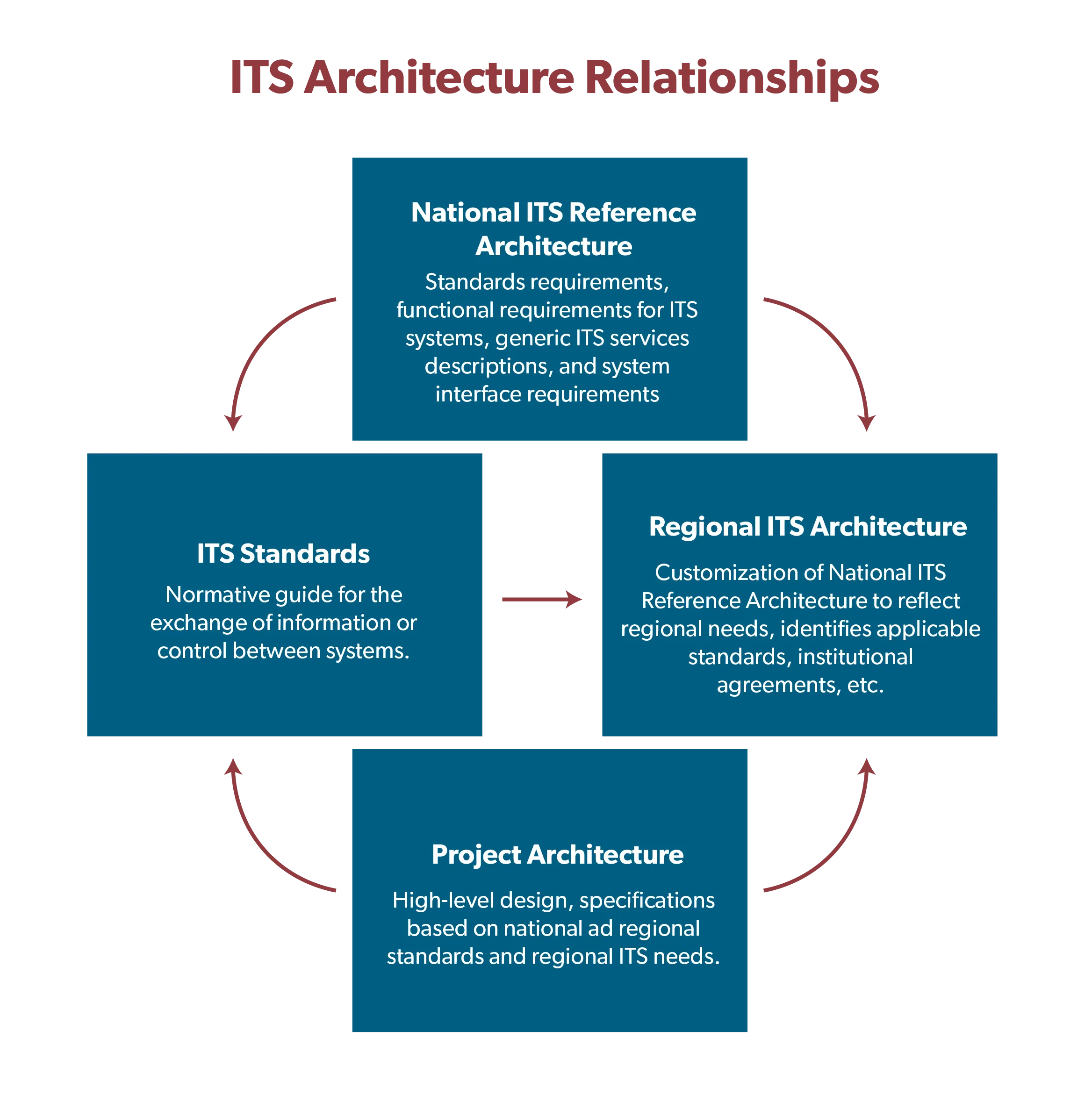
ITS planners, deployers and other stakeholders tailor the National ITS Reference Architecture (ARC-IT) to create Regional ITS Architectures that meet their specific needs. Regional ITS Architectures therefore consist of functions within ITS elements and information flows that interconnect each of the ITS elements in the region (and with ITS elements outside the region). Since information flows are mapped to ITS standards in ARC-IT, and since a Regional ITS Architecture is based on ARC-IT, the standards mapping to information flows is also readily available. The same holds true when developing ITS Architectures for a project.
Connecting ITS Standards to the Regional and Project ITS Architecture
ITS planners, deployers and other stakeholders tailor the National ITS Reference Architecture (ARC-IT) to create Regional ITS Architectures that meet their specific needs. Regional ITS Architectures therefore consist of functions within ITS elements and information flows that interconnect each of the ITS elements in the region (and with ITS elements outside the region). Since information flows are mapped to ITS standards in ARC-IT, and since a Regional ITS Architecture is based on ARC-IT, the standards mapping to information flows is also readily available. The same holds true when developing ITS Architectures for a project.
ARC-IT provides many tools and resources to ensure the successful implementation of regional and project ITS architectures:
- The Regional Architecture Development for Intelligent Transportation (RAD-IT) is a software application that supports development of regional and project ITS architectures using ARC-IT as a starting point. RAD-IT assists transportation planners and system integrators, both in the public and private sectors. RAD-IT can produce a user tailored list of standards-based communications solutions to assist with the region’s planning efforts.
- The Systems Engineering Tool for Intelligent Transportation (SET-IT) provides a single software tool that integrates drawing and database tools with ARC-IT so that users can develop project architectures for pilots, test beds and early deployments. It includes tools to create customized outputs of the standards-based communications solutions as well as communications diagrams for each interface.
- VIEW-IT is a downloadable software package that allows the ARC-IT website to be viewed on a local device while offline.
- SHARE-IT is a repository of architecture-related products that enables users to access different implementations of ARC-IT that may be useful to them. This repository may include projects from a multitude of DOT initiatives.
- ASQ-IT is a web-application that allows ARC-IT users to query about ARC-IT system documentation.
See more information on all resources here.
Architecture & Standards Relevant Policy
Standards-based ITS is most powerful and produces the greatest benefit when deployed under a comprehensive regional (or corridor) transportation planning effort. Such an approach ensures that the ITS requirements (and other transportation needs) of all transportation stakeholders in the region are identified, resulting in an integrated and multimodal transportation network. Standards allow agencies to integrate ITS functions and services. Standards work hand-in-hand with the National ITS Reference Architecture, enabling a systematic and comprehensive approach to ITS integration and deployment. ITS standards are specifications that define how transportation system components interconnect and interact within the overall framework of the National ITS Reference Architecture.
They specify how different technologies, products, and components interconnect and interoperate among the different systems so that information can be shared automatically.
To facilitate interoperability and encourage the use of ITS standards in deployments, the U.S. Department of Transportation published two important and related documents:
- The Federal Highway Administration's (FHWA) Intelligent Transportation System Architecture and Standards — Title 23, Part 940 (23CFR940), available here.
- The Federal Transit Administration's (FTA) National ITS Architecture Consistency for Transit Projects available here.
These documents support the development and deployment of regional ITS architectures. A regional ITS architecture establishes a framework that helps guide the integration of ITS components. Applicable ITS standards can be derived from a regional architecture based on the information flows specified in the regional architecture. Standards can enhance the communications of ITS systems identified in the architecture and help to reduce stove-piping.
Support for project development is also available through the Systems Engineering for ITS website here.